
The Creator Sessions #1 · with Uncanny Harry · 1h 33m
Two Years to Two Weeks: Uncanny Harry's Six Films, Broken Down
The very first Creator Session: Uncanny Harry screens six films back to back, from The Betrothed to The Quarry, shows a first look at Here Be Monsters, and explains exactly how each one was made.
The short version
Uncanny Harry, real name Ryan Phillips, was the guest on the very first Creator Session. A former cameraman who studied under Ken Russell and spent years directing at the BBC, he has been making AI films since 2022, and says a short film that used to take him two years now takes two weeks. We screened six of his films back to back: The Betrothed, made in two and a half days in Seedance 2.0's closed access; Blood and Canvas, his most-watched YouTube video at the time and a Metamorph Award winner, made in Kling 3.0; the found footage horror The Innsmouth Void; Dust; Clickbait; and The Quarry, an unfinished drama from a script he wrote 15 years ago. Along the way he explained why a mustache changes the voice you get from a model, why he runs every 15-second generation three times, how to prompt six or seven characters at once, and why AI lets British creators tell British stories without compromise. He closed by premiering the first minute and a half of Here Be Monsters, unfinished and ungraded.
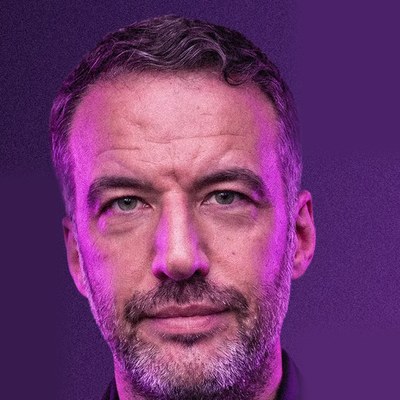
The guest
Who is Uncanny Harry?
Uncanny Harry is Ryan Phillips, a British director and AI filmmaker based just outside London. He started as a cameraman, studied under Ken Russell and spent more than 20 years in television, including at the BBC, before turning to AI film in 2022. His films include The Betrothed, Blood and Canvas, The Innsmouth Void, Dust, Clickbait, The Quarry and the series Here Be Monsters, and he was the guest on the first ever AI LIVE Creator Session.
- Real name
- Ryan Phillips
- Known for
- Here Be Monsters, Blood and Canvas, The Betrothed, The Quarry
- Company
- Uncanny Harry Productions
- Based in
- Rochester, just outside London
- Before AI
- Cameraman, studied under Ken Russell, 20+ years directing in British television including the BBC
- Making AI films since
- 2022
- Award
- Metamorph Award for Blood and Canvas
By the numbers, per Ryan
Key takeaways
- 01
Directing AI is like directing a crew: be clear and concise, and leave the model some room. Ryan doesn't write giant prompts, because overloading the model muddies it and it can't tell what matters.
- 02
Faces change voices. Models only have a few stock voices, but put a mustache on a soldier and you can get a different, more aristocratic voice out of the same prompt.
- 03
Treat a 15-second generation like a shoot, not a button press. He runs each one about three times, takes the close-up from one and the intonation from another, and fills gaps with four or five-second gens.
- 04
For crowds, keep shots tight, attach a character sheet for everyone, and don't try to reinforce characters with text. Past three people expect rerolls; his record is six or seven recognisable characters in one shot.
- 05
Pick the model for the performance. Kling 3.0 made Blood and Canvas because it is cheaper and better at subtle facial acting, where Seedance can try to do too much.
- 06
AI lets you tell stories about where you're from without diluting them for an American market, down to prompted North Yorkshire accents that he clipped and fed back as references.
- 07
You can make anything now, and that is the problem. Set yourself a brief, some boundaries and a deadline of three, four or five days, and make a story rather than a model demo.
The session, narrated
From two years to two weeks.
This was the first Creator Session ever. Ryan had been living like a goblin to finish a new piece, went for a run, and got back 15 minutes before the show in the middle of a UK heatwave. Chris and Andrew hosted, with Paul producing, and instead of the usual audience vote the chat sent in questions about each film. We watched six of his films back to back, plus a first look at something unfinished. This is the session, narrated chapter by chapter.
Start the narrationSkip to the 15 lessons
Run of show
- 0:00Named after the valley.
- 8:39Talk to it like a crew.
- 15:58One button press won't get you there.
- 20:27A love story, and a demon god.
- 30:36Six or seven, then reroll.
- 32:51The right model for subtle acting.
- 40:53Tell stories about where you're from.
- 49:04One image, one conversation.
- 53:07Set yourself a brief.
- 1:02:01Easter eggs, and a two-week film.
- 1:13:31A script from the cupboard.
- 1:22:17Show the world, don't explain it.
Named after the valley.
Chris's first question was the obvious one: why Uncanny Harry? It is a play on the uncanny valley, the feeling you get when something looks human but isn't quite right. Early AI had plenty of that, demonic and otherworldly, and the name stuck. Ryan has been making AI work since 2022, right at the very early stage, in the era of Kaiber and Midjourney 3 and 4.
Producer Paul had found something Chris didn't know: Ryan studied under Ken Russell. When Ryan met him, Russell had fallen out of favour with Hollywood producers and was shooting The Fall of the House of Usher on Super 8 and DV, with bugs in a giant aquarium. Ryan thinks he would have loved AI, because it lets you make stories independently.
“He loved doing what he wanted to do, and he took no prisoners.”
Uncanny Harry▶ 4:42
AI filmmaking is now pretty much Ryan's full-time job, and has been his main income for the last year and a half. He was wrapping up his last broadcast projects at the BBC, where he was mainly based at Broadcasting House, and had permission to work on AI independently. Andrew, who worked in BBC radio before leaving to help launch MySpace, asked how the BBC felt about Ryan becoming the AI guy. Some people see AI as an opportunity, Ryan said, and others as something that will destroy jobs and traditional craft, the same argument as everywhere.
Talk to it like a crew.
Asked what transferred from broadcast, Ryan said direction. He started out as a cameraman, and talking to a camera operator or another department about what you want is, he says, much the same as talking to an AI: concise and controlled, but with room for them to put their own stamp on it.
So he is not one for giant prompts. He iterates on images to get the character design right, but keeps the direction for the animation succinct, because a model fed too much can't tell what matters.
“Put a nice concise prompt in that's pointing to exactly what you want, then it gets it pretty much every time.”
Uncanny Harry▶ 10:11
The hosts pointed out that Ryan's work is full of lip sync and dialogue, the thing most AI filmmakers avoid. The safe production choice, Ryan agreed, is images, close-ups and music with no dialogue, or perhaps a voice-over. He likes telling a story without dialogue, but most stories need people talking to each other, so he has been pushing it for a long time. Real actors' voices still make a huge difference.
Then he gave away the tip of the session. Models only have a few stock voices, and prompting a soldier for a different voice often changes nothing. Change the face instead.
“What you'll also find is faces will change voices.”
Uncanny Harry▶ 12:47
Put a mustache on that soldier, and the same voice prompt can come back aristocratic. He had only found it out the other day. Mary's question from the chat followed: what old broadcast habit did he have to unlearn? Going slow. Personal work for social media has to get out fast, because the models change so quickly and people are watching on their phones, not on television.
“I think that speed is of the essence now for all of us.”
Uncanny Harry▶ 14:45
One button press won't get you there.
Paul asked whether Ryan really uses all 15 seconds of a Seedance generation, and what he thought of 30-second gens coming in Seedance 2.5. His method is to plan what the scene can achieve in 15 seconds, because the model keeps the scene, the space and the characters far more coherent inside one generation, then run it about three times.
Ryan's 15-second method
How he gets one usable 15-second shot
- 01Plan what 15 seconds can holdLook at the scene and work out how much of it one generation can carry. Scene, space and characters stay far more coherent inside a single gen.
- 02Run it about three timesMost of his shots get around three runs of the full 15 seconds.
- 03Cut between the takesMaybe the close-up from the second run and the intonation from the third, the way you'd cut between takes on a real shoot.
- 04Bulk it out with short gensAdd four or five-second generations where the sequence needs more.
- 05Let an agent remember the basicsStanding instructions like no music get added to every prompt by invideo's Agent One, so a rushed prompt doesn't cost a generation.
From 16:11 to 18:09 in the session.
“You're going to use different takes from different hits. So I think that's an important thing to get your head around, that is one button press is not going to get you there.”
Uncanny Harry▶ 17:21
He will use 30-second generations. They will make him faster, but more expensive, since he expects to run each of those three times too, and a 4K 30-second gen will be heavy duty. It has already made him less flippant: he used to misspell prompts or forget to add no music, which an agent like invideo's Agent One now handles by adding standing instructions to every prompt.
The speed is real. A three-minute personal piece used to take him almost a month. Now it takes three days with a bit of prep, and good 30-second gens might make it two. The catch is the cost, and what it does to the field.
“I think we're starting to see a gap opening up between the hobbyists and people who are doing it professionally.”
Uncanny Harry▶ 19:12
A love story, and a demon god.
The Betrothed was Ryan's first Seedance 2.0 film, made in about two and a half days while the model was still in closed access. Lady Amelia is courted on a ship by a man who begs her to start a new life with him in America, but she is promised to something else. The story is original. Cthulhu and his mythology come from H. P. Lovecraft, whose work is now out of copyright, which Ryan called a very quick way of accessing a mythology.
It started with a Midjourney image he made almost two years earlier, of Cthulhu rising out of the sea in front of a boat. He asked himself what the story could be, and the answer was a love story on board, with the heroine betrothed to a demon god from another dimension. Then he built it as he went.
How The Betrothed was made
Two and a half days, from one old Midjourney image
- 01Start from an old imageA Midjourney image from almost two years earlier, of Cthulhu rising in front of a boat.
- 02Rub out the monsterHe removed Cthulhu from the image and gave Seedance a long prompt describing the scene and the characters.
- 03Let the model cast itThe wide shot of the boat and the opening conversation are text prompted. He let Seedance invent the characters.
- 04Lock the charactersHe grabbed the characters from those shots and turned them into character sheets.
- 05First and last framesMuch of it used first and last frames made in Nano Banana, prompted to look like the same place.
- 06Switch to references halfwayHe tested Seedance's Omni model with a wide of the boat, an image of the two leads and what should happen, then grabbed and upscaled earlier frames as references for the next shots.
From 24:27 to 26:46 in the session. He still uses the frame-grab method.
“I let it do the opening move, and then I grabbed the characters and turned them into character sheets. So I sort of let it make the characters up.”
Uncanny Harry▶ 25:40
The music came from Suno, and his first move is to tell Suno what the music is for at the front of the prompt: a cinematic score for a film with Cthulhu. People think that's irrelevant, he says, but it sets the tone. Chris shared a tip from Issa at Google I/O, who puts timestamps in his music prompts to time the drums to the action, and a viewer said ElevenLabs music can do the same.
Ryan's own trick needs no audio workstation. He remixed the same Suno track three times, each one more intense, and cut between them.
“I think I did like three remixes of the same song, building the intensity in each remix.”
Uncanny Harry▶ 29:16
Because every remix shares the same beat and sound, there are points where you can join them smoothly enough to get away with it.
Six or seven, then reroll.
A question from the chat: what's the best tip for prompting multiple people? Keep the shots tight and always use character references. Past three people the model starts confusing them, moving one person's features onto another, and the rerolls pile up. The most recognisable characters he has managed in one shot is six or seven.
Prompting many characters
Holding six or seven characters in one film
- 01Keep the shots tightMore than three people in a shot and the model starts swapping their features, so expect rerolls.
- 02A character sheet for everyoneAttach a sheet for each character rather than describing them again in text, which gives the model room to reinterpret.
- 03Short wides, then cut inEstablish the wide with everyone together, keep it short, then cut to smaller groups, close-ups and over-the-shoulders.
- 04Give wides what they needIn a wide the model works at a distance, so close-up detail matters less.
- 05Composite when it won't holdShoot the same static background with three people, then with another three, and layer them together.
From 30:50 to 32:46 in the session.
“If you try and use text prompts to reinforce the character, that can sometimes give the model leeway to make its own interpretation.”
Uncanny Harry▶ 32:14
Even with good prompting, he says, it's still a stickler, and he was hoping Seedance 2.5 would be a little better at it.
The right model for subtle acting.
Blood and Canvas was the most-played video on Ryan's YouTube channel, and the film that later won him a Metamorph Award. A broke painter refuses to sell his collection to the dealer he owes two years of rent, and his paintings take care of the rest. Ryan calls it a love letter to British Hammer horror and American horror of the 80s: the Sam Raimi films like The Evil Dead he loved as a kid, and the Christopher Lee and Peter Cushing films on TV, with their short, twisty tales.
The chat compared it to The Twilight Zone and Night Gallery, and the hosts singled out the facial acting. That was the reason he made it in Kling 3.0, through his partnership with invideo, even though he already had beta access to Seedance.
“I think Kling's a really, really good tool. It's been overshadowed a lot by Seedance, cuz Seedance can do kung fu cats and all that sort of stuff.”
Uncanny Harry▶ 38:03
For a subtle story, Kling is cheaper and better. Ask Seedance for a simple little gesture and it sometimes tries to do too much, where Kling sticks to what you asked for. It does photo realism well, and you can make 4K close-ups far more cheaply, which suits intimate stories.
invideo, he explained, doesn't make its own models. It is an aggregator with all the models on one platform, and the biggest one in India, serving Bollywood. He likes that it lets creators roll with their own work, rather than handing them a rigid script of what to say about it.
Tell stories about where you're from.
In 2019, the setup goes, two YouTube potholers went missing in the Yorkshire Dales. Tom and Andy's cheerful vlog at Innsmouth Gill goes off the survey and very wrong. It is found footage, made in Seedance 2.0, and it went from banter between two North Yorkshire lads to pretty intense, as Chris put it, in the space of one video.
Andrew said what he likes most about Ryan's work is that it is very British, from Camden Market on a bridge in Blood and Canvas to these accents. Danny Ratcliff, who grew up in North Yorkshire, said in the chat they were spot on. They weren't real actors. Ryan prompted the accents in Seedance, then locked them.
“I then clipped those up and fed them back in as references. So they then kept those voices the whole way through.”
Uncanny Harry▶ 45:51
For Ryan, that is the whole point. Take a great idea to an American production company and they will often want to make it an American story, because that is their biggest market and how they recoup their money.
“This is the big thing about AI, is that we can tell stories about where we're from without compromise.”
Uncanny Harry▶ 46:01
A British story, a Thai one or a South American one, told without diluting it for a mass audience. Jimmy from 404 Films summed it up in the chat: win your niche, win the world.
One image, one conversation.
Dust is short and quiet: a father and his son Leo under the stars, deciding that nothing matters unless you make it matter, before heading home for dinner. Chris remembered it as a welcome break from the heavy sci-fi when it was on the weekly show. It grew from a single Midjourney image, the wide shot, and one question: they're having a conversation, so what are they talking about?
Going from horror to something this gentle is a freedom Ryan doesn't take for granted. Seeking funding as a filmmaker, you need a lane, the horror guy or the comedy guy, and a history of work that proves you can sell it. With production this cheap, he says, you don't.
“You want to make a love story, you make a love story.”
Uncanny Harry▶ 51:36
Set yourself a brief.
Andrew put a question from the chat: where do the ideas come from? Often something personal. Ryan is a father, and he has conversations like the one in Dust with his boys. The other trigger is a new model, or some time to experiment, and he has one rule for that.
“There's no point in just going, oh, here's some pretty pictures, isn't this model great? Make a story. Sharpen your storytelling skills while you do it.”
Uncanny Harry▶ 54:03
The Innsmouth Void began as a brief to himself: he hadn't seen any found footage horror made with AI, so could it be done? Innsmouth is Lovecraft again, a town in bed with fish demons, and he had tried a three-shot version with cavers back in Runway. When you had two mates and a camera, the limits were built in. Now you have to impose them.
“The problem is you need to set yourself boundaries, cuz you can do anything now.”
Uncanny Harry▶ 55:09
Pick something to explore, write yourself a little brief, and set a time to finish: what's the best I can do in three, four or five days? Danny guessed that Neil Marshall's The Descent inspired the caving film, and it did. Ryan still sees as much as he can at the cinema, and doesn't like calling himself an artist: too working class, he joked, even though his mum is a potter and his dad studied at the Royal College of Art.
“What's in your training model? You got to put as much in the model as possible, so you got enough to draw upon when you're doing it.”
Uncanny Harry▶ 57:25
Asked what genre he wants to tackle next, he said what most people want next: IP. One world, with its own rules, where you can make a comedy, a horror, a social drama or a romance. Marvel had that idea but feels too Hollywood and mainstream for him. He prefers the way Tarantino's films link to each other without everyone living in one universe. The one thing he probably won't do is a musical.
Easter eggs, and a two-week film.
Clickbait is about simulation theory. A TV presenter, who Chris spotted was Ryan himself, lays out the odds that we live in a simulation, quoting Neil deGrasse Tyson's 50/50 and Elon Musk's billion to one, while a family bickers at home and things go very wrong. Chris called it a bit of an in-joke, because he and Andrew talk about this all the time.
It is packed with Easter eggs. Lola spotted Streamberry, the fake Netflix. There is an ad for Spectacular Optics, from Cronenberg's Videodrome, and posters for Ryan's own films on the walls, including The Innsmouth Void. Ryan sees this as world building, the way the Tarantino-verse sits next to our own world. He makes the posters and feeds them in, and on his latest piece he is inventing money and products too, so nobody ever has to put Coca-Cola in a shot.
Clickbait is also a remake. He first shot it on a mobile phone five or six years ago, and it won awards in the States. Making films by hook or by crook is what he has always done, and AI has been a boon.
“It used to take me 2 years to make a short film. The organization involved and getting everything together and making sure it was all perfect. And now it takes me 2 weeks.”
Uncanny Harry▶ 1:08:57
Then versus now
How long Ryan's films take, before and after AI
From 18:33 and 1:08:57 in the session. Broadcast work with actors takes longer.
Blood and Canvas, Ryan confirmed, won the Metamorph Award, and he took his partner to the festival. Then the reality of the schedule. Paid work is a conveyor belt: he is usually booked two or three weeks ahead, with project work into the end of September, and he turns down jobs that need doing tomorrow. Personal films get made in the gaps, on evenings and weekends, in 12-hour days with a short break, before he comes up for air and family time.
He edits in Adobe Premiere Pro, having learned on Avid years ago. DaVinci Resolve is free or a one-off fee and he would switch if he had the time, but he likes the After Effects integration and Adobe's AI features, and has just signed up for another eight months.
A script from the cupboard.
The Quarry was the chat's favourite, and Chris's: a mum, late again, takes her son Tyler out for the day, past the fence and into an old quarry where she and her mates used to run wild. Danny called it his favourite unfinished piece in AI. Andrew trains TV producers, and this is the film he always shows them to prove what is possible now, because it feels so British.
The script is around 15 years old. It never got made and had been sitting in the cupboard, until Ryan thought the tools might be ready to do it convincingly. He made it in early Seedance 2.0, at 720p, with some shots in Kling, a couple of hours at a time. Then the conveyor belt of paid work got too packed, and that is the trouble with putting a film down.
“Once you leave something, if you come back to it a month later, all the tools have changed.”
Uncanny Harry▶ 1:19:30
Everything is 4K now, and new shots would jump out next to the 720p ones. He had reached the tricky bit too: no spoilers, but they will meet the man with the wheelbarrow. His plan is to go back with Seedance 2.5 at 4K and see how close it can get to something most people would take for a real piece of television.
Show the world, don't explain it.
The session ended with a premiere. Paul had seen it; Chris and Andrew hadn't. It was the first minute and a half of Here Be Monsters, with no grade and no ending yet: a ginger cat chases a rat, two monster hunters weigh up a young creature worth about 40 quid, and decide to follow it back to the den for real money.
The cat and the rat are a hint at why this world is so messed up. London has been destroyed, there are monsters everywhere, and Ryan refuses to explain it all at once.
“They try and do a lot of exposition up front, but this is sort of show you what's happened and sort of build out the world slowly.”
Uncanny Harry▶ 1:25:48
Paul asked whether the monster statue in The Innsmouth Void was the same creature. There is a Lovecraftian element to it all: London gangsters, Lovecraftian monsters and London humour, a collision of everything he has made so far. It is the one-world idea from earlier, with factions working towards different ends, and room to break off and follow the grunts at the bottom rather than the starship captain. These two hunt monsters for the bounty. For the gritty streets, he used reference images for the style of housing he wanted.
Carlos asked what The Quarry was made in: early Seedance 2.0 at 720p, partly in closed access, plus some Kling. Ryan hoped to put the new piece out the next day, next week at the latest. It landed the next day, 9 July, as Here Be Monsters, Episode 1: Strawberries. You can find him at uncannyharry.com, as Uncanny Harry on X, and as Ryan Phillips on LinkedIn.
The lesson ledger
15 lessons from 93 minutes with Ryan.
Every lesson is pinned to the moment it was said. Each one ends with something you can do this week.
-
01Craft
Prompt like you're briefing a crew
“Put a nice concise prompt in that's pointing to exactly what you want, then it gets it pretty much every time.”Uncanny Harry ▶ 10:11
Try thisCut your next video prompt to the camera move, the action and one line of mood. Iterate on the image for the detail instead.
-
02Craft
Faces change voices
“What you'll also find is faces will change voices.”Uncanny Harry ▶ 12:47
Try thisWhen a character keeps getting the same stock voice, change their face first: add a mustache, age them, change the build, then prompt the voice again.
-
03Mindset
Unlearn going slow
“I think that speed is of the essence now for all of us.”Uncanny Harry ▶ 14:45
Try thisShip your next personal piece while the model you made it with is still new, and save the polishing for paid work.
-
04Workflow
Fill the 15 seconds
“You get the coherency of scene, of space, and characters a lot better in that 15 seconds. So you want to try and do as much as you can in that 15 seconds.”Uncanny Harry ▶ 16:35
Try thisBefore you generate, mark which beats of the scene can fit in one 15-second gen, and only split them where you have to.
-
05Workflow
Cut between takes, like a real shoot
“You're going to use different takes from different hits. So I think that's an important thing to get your head around, that is one button press is not going to get you there.”Uncanny Harry ▶ 17:21
Try thisRun your key shots three times and cut between them: the best close-up from one, the best line reading from another.
-
06Workflow
Let the model cast, then lock the sheets
“I let it do the opening move, and then I grabbed the characters and turned them into character sheets. So I sort of let it make the characters up.”Uncanny Harry ▶ 25:40
Try thisText prompt your opening shot with only a description of the characters, then build character sheets from the ones you like.
-
07Craft
Remix the score at rising intensity
“I think I did like three remixes of the same song, building the intensity in each remix.”Uncanny Harry ▶ 29:16
Try thisStart your Suno prompt with what the music is for, then remix the track twice more with more intensity and cut between the versions on the beat.
-
08Workflow
Hold a crowd with sheets, not words
“If you try and use text prompts to reinforce the character, that can sometimes give the model leeway to make its own interpretation.”Uncanny Harry ▶ 32:14
Try thisFor shots with three or more people, attach a sheet for every character and drop the text descriptions of them.
-
09Craft
Pick the model for the performance
“If you're trying to sell a subtle story, A, it's cheaper, B, for some of the subtler stuff it's better.”Uncanny Harry ▶ 38:09
Try thisTest your quietest close-up in Kling as well as Seedance before you commit a whole film to one model.
-
10Workflow
Clip the voice and feed it back
“I then clipped those up and fed them back in as references. So they then kept those voices the whole way through.”Uncanny Harry ▶ 45:51
Try thisOnce your opening scene has the voices you want, cut a clean clip of each character speaking and attach it to every shot after.
-
11Story
Tell stories about where you're from
“This is the big thing about AI, is that we can tell stories about where we're from without compromise.”Uncanny Harry ▶ 46:01
Try thisSet your next short where you grew up, with the accents, places and humour you know, and don't explain them for anyone else.
-
12Story
Make a story, not a model demo
“There's no point in just going, oh, here's some pretty pictures, isn't this model great? Make a story.”Uncanny Harry ▶ 54:03
Try thisNext time a new model drops, test it with a one-minute story with a beginning, middle and end, not a montage.
-
13Mindset
Set yourself a brief and a deadline
“The problem is you need to set yourself boundaries, cuz you can do anything now.”Uncanny Harry ▶ 55:09
Try thisWrite a three-line brief for your next piece, give it one constraint, and set a finish date three to five days away.
-
14Workflow
Finish before the tools move on
“Once you leave something, if you come back to it a month later, all the tools have changed.”Uncanny Harry ▶ 1:19:30
Try thisOnly start a personal film when you can see a clear run of days to finish it, or plan to remake it from scratch later.
-
15Story
Show the world, don't explain it
“They try and do a lot of exposition up front, but this is sort of show you what's happened and sort of build out the world slowly.”Uncanny Harry ▶ 1:25:48
Try thisCut the explanation from your opening and replace it with one visual clue about what happened to your world.
The toolkit, in Ryan's words
- Seedance 2.0core
The Betrothed, The Innsmouth Void, Dust and The Quarry. He had it in closed access and runs most 15-second gens three times.
▶ 20:14 - Kling 3.0core
Blood and Canvas. Cheaper than Seedance and better at subtle facial acting, with affordable 4K close-ups.
▶ 38:03 - Midjourneycore
Where his films start: The Betrothed came from a two-year-old Midjourney image, Dust from a single one.
▶ 24:59 - Sunocore
His scores. He tells it what the music is for, then remixes the same track at rising intensity and cuts between them.
▶ 27:20 - Nano Bananauses
First and last frames for much of The Betrothed.
▶ 26:01 Adds standing instructions like no music to every prompt. Clickbait was made with it, and Blood and Canvas was made through invideo too.
▶ 17:58- Seedance 2.5next
He will use its 30-second gens: faster, but pricier, since he expects to run each one three times. He plans to finish The Quarry in it at 4K.
▶ 18:14 His editor since Avid, for the After Effects integration and Adobe's AI features. He has signed up for another eight months.
▶ 1:12:35- DaVinci Resolvemaybe
Free, or a one-off fee for Studio. He would switch if he found the time.
▶ 1:12:57 - Runwaythen
An early three-shot version of the caving idea behind The Innsmouth Void.
▶ 54:37
On the record
“It used to take me 2 years to make a short film. The organization involved and getting everything together and making sure it was all perfect. And now it takes me 2 weeks.”
“This is the big thing about AI, is that we can tell stories about where we're from without compromise.”
“What you'll also find is faces will change voices.”
“One button press is not going to get you there.”
“The problem is you need to set yourself boundaries, cuz you can do anything now.”
“What's in your training model? You got to put as much in the model as possible, so you got enough to draw upon.”
“I don't like the word artist. I'm sorry. Too working class.”
“He loved doing what he wanted to do, and he took no prisoners.”
Quotes are trimmed of filler words for reading. Every timestamp opens the session at that moment.
Chapters
- 0:00The first ever Creator Session, and why Uncanny Harry?
- 3:49Studying under Ken Russell
- 5:48Is AI filmmaking his full-time job now?
- 8:39What transferred from directing for the BBC
- 10:58Why he pushes dialogue when others avoid it
- 12:41The mustache trick: faces change voices
- 13:37The broadcast habit he had to unlearn
- 15:58Does he use the full 15 seconds, and what will 30 change?
- 20:27THE BETROTHED
- 24:02How it was made in two and a half days
- 27:07Scoring it in Suno, and the remix trick
- 30:36How do you prompt multiple characters?
- 32:51BLOOD AND CANVAS
- 36:23Hammer horror and The Evil Dead
- 37:35Why Kling 3.0 suited this film
- 40:53THE INNSMOUTH VOID
- 45:00Prompted Yorkshire accents, and British stories without compromise
- 49:04DUST
- 50:27One Midjourney image, one conversation
- 53:07Where do his ideas come from?
- 55:09Why you need to set yourself boundaries
- 56:14The Descent, and still going to the cinema
- 58:33What genre is next? One world, many genres
- 1:02:01CLICKBAIT
- 1:05:53Easter eggs, invented brands and world building
- 1:08:30The mobile film he remade, from two years to two weeks
- 1:09:17The Metamorph Award, paid work and 12-hour days
- 1:12:28Premiere Pro or DaVinci Resolve?
- 1:13:31THE QUARRY
- 1:18:58A 15-year-old script, and why it stalled
- 1:22:17HERE BE MONSTERS: first look
- 1:24:34Building a world without the exposition dump
- 1:28:34What The Quarry was made in, and where to find Ryan
Questions this session answers
Who is Uncanny Harry?
Uncanny Harry is Ryan Phillips, a British director and AI filmmaker based in Rochester, just outside London. He started as a cameraman, studied under Ken Russell and spent years directing at the BBC, and has made AI films since 2022. His films include The Betrothed, Blood and Canvas, The Innsmouth Void, Dust, Clickbait, The Quarry and the series Here Be Monsters.
Why is he called Uncanny Harry?
It is a play on the uncanny valley, the unsettling feeling you get when something looks almost human but not quite. He chose it when a lot of early AI looked demonic, weird and otherworldly. He has been making AI work since 2022.
What AI tools does Uncanny Harry use?
Mainly Seedance 2.0 for video, Kling 3.0 for subtle performances, Midjourney for the images his films start from, Nano Banana for first and last frames, Suno for music, invideo's Agent One for prompting, and Adobe Premiere Pro to edit.
How was The Betrothed made?
Ryan made The Betrothed in about two and a half days with Seedance 2.0 while it was in closed access. He started from a Midjourney image of Cthulhu he had made almost two years earlier, removed the monster, text prompted the opening scene and let Seedance invent the characters, then turned them into character sheets. He used Nano Banana first and last frames, then upscaled frames as references. Cthulhu comes from H. P. Lovecraft's public domain work, and the music is three Suno remixes of the same track.
Why did Uncanny Harry make Blood and Canvas in Kling instead of Seedance?
Because it is a story driven by subtle facial acting. Ryan says Kling 3.0 is cheaper, better at subtle gestures and photo realism, and makes 4K close-ups more affordable, while Seedance sometimes tries to do too much with a simple gesture. He made it through his partnership with invideo, and it won a Metamorph Award.
How do you get different voices from Seedance?
Ryan's tip is that faces change voices. Models have only a few stock voices, so prompting a different voice often changes nothing, but changing the character's face, for example adding a mustache to a soldier, can produce a different voice from the same prompt. To keep a voice consistent, he clips a character's lines from an early scene and feeds them back in as references.
How do you prompt multiple characters in AI video?
Keep shots tight, attach a character sheet for every character, and don't reinforce them with text descriptions. With more than three people expect rerolls, as the model swaps features between them. Keep wide shots short, then cut into smaller groups and close-ups, or composite groups of three over the same static background. Ryan's best is six or seven recognisable characters in one shot.
Why is The Quarry unfinished?
Ryan made The Quarry, from a script he wrote about 15 years ago, in early Seedance 2.0 at 720p, but ran out of time when paid work piled up. By the time he could come back, the tools had moved to 4K and new shots would no longer match. He plans to return to it with Seedance 2.5 at 4K.
What is Here Be Monsters?
Here Be Monsters is Uncanny Harry's original series, set in a post-apocalyptic London overrun with Lovecraftian monsters, mixing London gangsters, horror and London humour. Its first minute and a half premiered, ungraded and unfinished, on this session. He builds the world through visual hints rather than exposition.
New Creator Sessions every Wednesday
Long-form conversations with the best AI creators in the world, screening their work live. Tuesdays we review the week's best AI work and you vote.