
The Creator Sessions #8 · with Marco Magario · 1h 30m
Four Images, 83 Sets: Marco Magario Premieres Er Loop
Marco Magario premiered his dark comedy Er Loop live, then broke down how he made 83 scenes with no screenplay, four reference images and a Claude Code studio.
The short version
Marco Magario, who has quietly suggested many of the pieces on the weekly show, trusted AI LIVE with the world premiere of Er Loop, a 20-minute dark comedy after Plato's Myth of Er. Marco dies of stomach cancer, wakes up in the afterlife, and the three Fates tell him he can have any life he wants. He is very bad at choosing. The film is 83 scenes and no two share a set, and the whole thing uses four reference images: his own character sheet, built from phone photos in Photoshop, and the three Fates. Everything else is text to video in Seedance. There was no screenplay: he closed his eyes, asked what he wanted to see next, and built it, 83 times. We also watched a scene from HOLY GRAiL, the film he made in ten days before Cannes that got him hired by The Dor Brothers, and he explained his voice workflow, why storyboarding holds AI back, and the Claude Code studio behind it all.
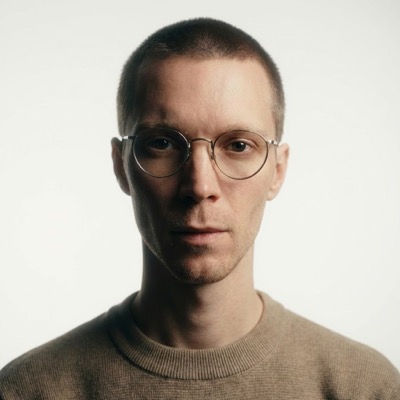
The guest
Who is Marco Magario?
Marco Magario is an Italian AI filmmaker who writes, directs, edits, scores and sound-designs his films alone. HOLY GRAiL, a Renaissance comedy he made in ten days, got him hired by The Dor Brothers at the World AI Film Festival in Cannes in 2026. His dark comedy Er Loop, made from four reference images, premiered live on AI LIVE on 16 September 2026.
- Known for
- Er Loop, HOLY GRAiL, FRACTAL
- Works with
- The Dor Brothers, since the World AI Film Festival in Cannes, 2026
- Festivals
- Top 60 finalist at WAIFF 2026 with FRACTAL
- Works in
- Seedance, Suno, Claude Code
- On AI LIVE
- Suggests many of the pieces on the weekly show, and premiered Er Loop on Creator Sessions #8
By the numbers, per Marco
Key takeaways
- 01
Er Loop is 83 scenes and no two share a set. The constraint came before the story: making HOLY GRAiL, Marco found that video models build environments more cinematically than image models, so he wrote a film where the set changes every time.
- 02
The whole 20-minute film uses four reference images: his own character sheet and one for each of the three Fates. Everything else is text to video in Seedance.
- 03
He cast himself, with a character sheet assembled by hand in Photoshop from real phone photos instead of a generated one. The facial realism settled it, and playing himself removes any likeness or copyright worry.
- 04
There was no screenplay. He closed his eyes, asked what he wanted to see, kept a scene only when it matched what he pictured, then asked what happens next. Eighty-three times.
- 05
For voices he keeps Seedance's native audio, steers the delivery with metatags instead of controlling the voice, and rerolls a scene at 480p until the read is right. ElevenLabs never sounded as natural.
- 06
He thinks storyboarding is bad for AI, because it locks the video model into an image model's less cinematic look. Multishot prompts with exact shot types, lenses and camera moves do the job better.
- 07
His Claude Code setup is built like a studio, starting from Andrej Karpathy's LLM wiki idea: a CLAUDE.md that routes the workspace, and separate agents for image, video, music, SFX and editing.
The session, narrated
What do I want to see next?
Paul was away, so Chris ran the desk, and Andrew was back after the flight cancellations that kept him off the previous week's shows. Marco is a familiar name to regulars: many of the pieces on the weekly show were his suggestions. He brought the world premiere of Er Loop. We watched a scene from HOLY GRAiL first, then all 20 minutes of Er Loop, then spent the rest of the session on how it was made. This is the session, narrated chapter by chapter.
Start the narrationSkip to the 15 lessons
Run of show
- 0:00A legend of the show.
- 7:05Can you forget I exist?
- 10:27You need to watch this.
- 14:38Fifty to one on the French.
- 19:41Real photos, assembled by hand.
- 27:42Wake up, idiot.
- 46:38A different set in every scene.
- 53:26Direct the delivery, not the voice.
- 1:00:17Three Fates, three stereotypes.
- 1:05:10That's the whole film.
- 1:09:40Talk, don't type.
- 1:18:51Build it like a studio.
A legend of the show.
Chris opened by calling Marco a legend of the show, even if viewers didn't know it: besides HOLY GRAiL, he has picked many of the pieces the weekly show has watched. Andrew was back after every flight in the UK was cancelled the week before, which meant Mary had filled in and he had missed Kavan the Kid's second session. Marco said Kavan is not just talented but humble and easygoing, someone who explains everything.
Asked who he watches, Marco said his feed is nothing but AI films and he watches everything. His view is that the West only sees the tip of the iceberg, because so many incredible creators in China publish only on Chinese platforms, not YouTube or Western social media.
That led Chris to a headline: Bilibili, which he described as the YouTube of Asia, is going global and accepting uploads from the West. Andrew compared it to football after the limits on foreign players were lifted. Creators won't like the competition, but the best will rise to the top.
Can you forget I exist?
Marco met Chris at the World AI Film Festival in Cannes, where he was a finalist with FRACTAL, his first short. Ten days before the festival, Seedance 2.0 became available, and he decided he needed a second film in his portfolio. He went to his wife first.
“Can you forget I exist for like 10 days?”
Marco Magario▶ 8:49
They have four daughters. For ten days he saw them only at meals and for the bedtime story he tells every night, and worked 16 to 18 hours a day. He gives the film's credit to his wife.
“The whole credits for the film is to my wife, of course, because she was an angel and she took care of everything.”
Marco Magario▶ 9:25
It was his first time with Seedance, though he knew Kling 3.0 well, so he spent one day working out the workflow and prompting. He had a rough script and revised it 23 times during production. With one day left he had no sound and no score, and made all of it in that last day, with thousands of generations in Suno.
You need to watch this.
He arrived in Cannes, in his words, a nobody, with HOLY GRAiL finished and the nerve to show it to people. On the first night he spotted Alex Patrascu at a table in his hotel, introduced himself, and showed his work to the group. A creator he called Martin took him under his wing and introduced him around, and within days he had met Chris, Yonatan Dor and the rest of the crowd.
“I started going up to people and telling them, you need to watch this.”
Marco Magario▶ 10:33
Yonatan made him an offer, and Marco started working with The Dor Brothers right after the festival.
“I came from nothing in this space, and then in 3 days I'm working with one of the best companies in the world making AI videos.”
Marco Magario▶ 12:48
Chris drew the lesson he keeps seeing: in-person events, from Cannes to the Bionic Awards in London to meeting Blacklight in San Francisco, make connections online events can't.
Fifty to one on the French.
For anyone who missed it on the weekly show, Andrew suggested a scene from HOLY GRAiL, Marco's comedy set in Renaissance Florence in 1503. After it went up on YouTube and X, Yonatan reposted it and it took off.
In the scene Marco chose, a man who knows how history goes bets on it: the Battle of Cerignola on 28 April, where the Spanish arquebusiers break the French charge, then the fall of Naples on 13 May without a siege, at 50 to 1. Then he asks what rich people do with money, and gets a lecture on diversification and passive income from agricultural land.
The Dor Brothers were in the live chat and called out the Roboarm Cam. Chris read it as a nod to Marco's trademark camera moves.
Real photos, assembled by hand.
Er Loop stars Marco. He joked that it's because he's a narcissist. The real reason was a test. Normally he generates character sheets with GPT Image 2 or Nano Banana Pro, starting from photos and letting one prompt lay out the sheet. This time he took photos of himself on his phone and assembled the sheet himself in Photoshop.
“I did a first clip test generation, and it was so crazy because the facial realism was completely different from everything I did before.”
Marco Magario▶ 21:07
That settled it. Playing himself also meant no copyright or likeness questions, a topic the Creator Sessions keep coming back to. And it gave the film a personal dimension: he plays himself as an idiot on purpose.
“I never take myself too seriously.”
Marco Magario▶ 22:27
Chris told the origin story. Marco had sent him a single clip of himself doing a little shuffle, the one that opens the film. Chris laughed so hard he asked what it was turning into, and watched it grow, version by version, into a full film. In HOLY GRAiL, by contrast, Marco cast himself as a minor character killed by an arrow after two minutes.
Before the premiere he set expectations: a dark comedy, fun on the surface, full of satire and references, with detail in the background worth looking for. He made every clip, the edit, the sound design and the score himself, generating more than 2,000 songs in Suno, including a rap and remixes of classical music that is out of copyright.
Wake up, idiot.
Marco thinks he has a gluten problem. It's stage four stomach cancer. He wakes to a voice repeating wake up, idiot, in an afterlife run by three Fates, who try to explain the Myth of Er, then put it simply: you are dead, and you get to choose the life you want. Clap your hands, and time, space and body are yours to change. Be specific, one warns him, or you get random results.
What follows is a run of lives he can't commit to: a flying superhero landing at a cliff-top mansion, a fantasy war against orc legions, the real world but better, where every church has become a centre for science and human progress, an army of his own clones, being hailed king of kings. Each time a Fate asks him to lock it in. Each time he is just testing stuff, and time is running out.
In the end he asks to be let out. He won't remember any of it, will he? Does the hamster remember his last run on the wheel? He wakes in his own life, beside his partner, with Nietzsche's eternal return on his mind. Would you do this all over again? Of course. Then a familiar voice: wake up, Marco, dinner is getting cold. And the loop begins again.
A different set in every scene.
First, a confession from Chris. During production he had suggested a futuristic digital pyramid civilisation, and there it was on screen, exactly as he had pictured it. Then the big question: where did this come from?
The idea started as a constraint. Making HOLY GRAiL, Marco built what he called dynamic scenes in his Claude setup: scenes with no environment references at all, just video. That's where he noticed something.
“Video models like Seedance are incredible at making environments. They can make the scene in a much more cinematic way than an image model can.”
Marco Magario▶ 49:32
So he set out to make a story where the set changes every time. An all-powerful man who can do anything felt too obvious. Then his love of philosophy clicked it into place: the Myth of Er from Plato's Republic, where a soldier dies, sees every life he could have lived, chooses one, drinks from the river Lethe and forgets, and the cycle goes on.
He always writes a screenplay before production. This time he didn't.
“It's only one question, which is what's going to happen next? What do I want to see next?”
Marco Magario▶ 52:09
Eighty-three scenes meant 83 rounds of that question, with the dialogue and the story developing on the go, like a stream of consciousness. That only works, he pointed out, when you are making it alone and don't need a crew aligned to a script.
Direct the delivery, not the voice.
Many of the chat's questions were about the grade. He tried a lot of looks and chose the dark one on purpose.
“This film is like an easy watch, but after all it's dark, because it reflects how we are completely incapable of taking choices.”
Marco Magario▶ 53:50
Grading was a huge mess, because Seedance's colour output isn't great. What helped was Topaz with HDR ProRes output, which gave him brighter colours and more bit depth to work with. In the chat, Eliott Mogenet called it a new AI genre, something impossible or very expensive without AI, and Chris agreed.
Then the accents. Chris described Marco sending him clips on WhatsApp asking whether each one sounded British or American. Marco's answer to the accent problem is not to fight the voice.
“If you try to control the voice too much you come up with something which sounds mechanic.”
Marco Magario▶ 57:04
Getting natural voices
Three ways to voice a Seedance character, and the one Marco uses
From Marco's answers at 56:58 to 59:56 in the session.
He generates on several aggregators, but never takes footage from Dreamina, because he finds too many noise artifacts and stained or pixelated frames to clean up. He is in Dreamina's creative partner programme, and mostly uses it for these cheap voice rerolls. He has told them about the noise, and expects it to be fixed.
Three Fates, three stereotypes.
Lara asked where the three women came from. The answer starts with Disney's Hercules, whose three Fates are a tall one with a long nose, a large one and a small one. Marco's versions are Clotho, Atropos and Lachesis, each built as a contemporary stereotype you recognise instantly.
Clotho has a snobbish, slightly French attitude. Atropos is an old Chinese lady, inspired by a Louis C.K. stand-up bit, a calm tea drinker who goes off the rails. Lachesis is his American stereotype, always eating junk food, and the one who saves him. At the end she claps and gives him his life.
“I'm an idiot. I never make a single right choice.”
Marco Magario▶ 1:02:52
The life she gives him is his real one. The family in the final scenes are his partner and his daughters. His partner needed only a full-body photo as a reference. Generating children from photos is blocked, as it should be, so his daughters came from a family picture: the one you see by the bed.
California Girl wondered in the chat whether Lachesis was gluttony from the seven deadly sins. Not quite, Marco said: the point was a figure you remember on sight, and each of the three has an addiction of some kind.
That's the whole film.
His favourite part is the religion sequence, funny without going too far. The hardest was the Iron Man sequence where he clones himself, which ate the most credits. Then he asked the hosts to guess how many images he made for the film. The guess: if he made 2,000 songs, he must have made even more images.
“There is a lot of misconception, especially for the people who approach AI video generation, in which they think that they have to create this huge amount of assets, while the whole film was four images.”
Marco Magario▶ 1:08:03
Four character sheets, his own and the three Fates. No style references, no set images. Everything is text to video, which is exactly why every scene can have a new set: you can't recreate the same set twice anyway. Chris contrasted it with Kavan the Kid's long scenes in fixed locations, which need many references, and suggested world models will be the way to lock environments in future.
Lara asked whether the camera movement was a signature. Completely intentional, he said. Every prompt sets how the shot starts, the camera angle, the lens and the aperture, and in a multishot prompt, the shot type, angle and movement for every cut.
Then versus now
HOLY GRAiL versus Er Loop
Two films, four months apart, both made entirely by Marco.
From 7:55 to 10:27, 19:41 to 24:57, 49:26 and 1:07:01 in the session. HOLY GRAiL runs about 32 minutes, Er Loop about 20.
Talk, don't type.
Chris described watching Marco work: dictating with Wispr Flow instead of typing, getting a big prompt back from Claude, testing it in Seedance, and judging the result. Marco explained why talking suits him: he pictures each scene with his eyes closed, and it is easier to say it than write it.
His Claude system is trained to turn that raw description into a prompt, and it is good enough that he doesn't read what it writes. He pastes it in and runs it twice.
“Do two generations, because if you do only one it could be random. If you do two generations then you usually understand if the prompt is correct or not.”
Marco Magario▶ 1:11:05
The scene loop
How Marco made 83 scenes without a screenplay
- 01Close your eyesPicture the scene and ask one question: what do I want to see?
- 02Say it out loudDescribe the scene by voice instead of typing. Chris says Marco dictates with Wispr Flow.
- 03Let Claude write the promptHis trained system turns the raw description into a full prompt: camera angle, lens, aperture, and every cut of a multishot. He doesn't even read it.
- 04Generate twiceTwo generations show whether the prompt is right or the first one was just random.
- 05Keep it only if it matchesIf it matches what he pictured, it stays. If not, he makes another one.
- 06Ask what happens nextThen the next scene. Er Loop is 83 turns of this loop.
From 51:25, 1:07:01 and 1:09:42 in the session.
Multishot, he says, is what changed everything. Before it, the alternative was storyboarding, which he thinks actively hurts AI film.
“I find that storyboarding is very bad for AI, because you lock the video model into something which he's forced into that kind of aesthetic.”
Marco Magario▶ 1:13:08
No image model makes truly cinematic frames yet. Ask one for an anamorphic lens flare and you get a flare, but not one that comes from the light sources in the scene. With multishot, the video model handles the cinematic look across the cuts far better than clips generated one by one from first frames. The hosts then looked ahead: Seedance 2.5 finally losing the plastic look, Kling and Veo updates expected before the end of the year, and open models fast enough to generate in real time.
Build it like a studio.
Generating the footage took about two weeks. The delay came after. He wanted the ending, after Lachesis claps, to be real footage, and shot a huge amount on an old camcorder for a home-video feel. When he edited it, it didn't speak to him. Kids are hard to film naturally: the moment the camera comes out, they change. So the ending became AI too.
The film is packed with Easter eggs. The song over the Iron Man sequence, which he wrote, mocks every superhero who can't fly, Batman included. And listen again to the opening song, knowing where Marco is sitting when it plays.
Then the question the chat had been waiting for, from vesicastudio: how did he train Claude? He went through every level, from chat, where you paste in files and skills until the context window fills up, to Cowork, with everything in a local folder, to Claude Code, which can use plugins and write Python scripts for you.
“The way you should build it is like a studio.”
Marco Magario▶ 1:23:55
The Claude Code studio
How Marco set up Claude like a film studio
- 01Start in chatEvery session needs files and skills pasted in, until the context window fills up and the results get worse.
- 02Move to a local folderWith Cowork, the files live in a folder on your machine instead of in the chat.
- 03Graduate to Claude CodeAdd plugins and capabilities, and let it write Python scripts for anything you need.
- 04Feed it raw files, Karpathy styleBased on Andrej Karpathy's LLM wiki, free on GitHub: raw inputs go into a folder and a system prompt organises them into a wiki that makes connections. Plug it into Obsidian for memory.
- 05Let CLAUDE.md run the front deskIt routes everything and explains how the workspace is organised. You are the head of the studio.
- 06Hire your departmentsSeparate agents for image, video, music, SFX and editing, plus other domains like a social media agent that publishes and schedules.
From 1:22:22 to 1:26:22 in the session.
It is hard, he admits. You have to get into a mindset of trying and trying again. Chris called him the Claude master and hopes to bring him back for a session on exactly that. His last tip came from the score: take music that is out of copyright and remix its style in Suno. He mixed Wagner's Valkyrie into one track. Chris called it a tip for the vault.
The lesson ledger
15 lessons from 90 minutes with Marco.
Every lesson is pinned to the moment it was said. Each one ends with something you can do this week.
-
01Business
Walk up to people and show them the work
“I started going up to people and telling them, you need to watch this.”Marco Magario ▶ 10:33
Try thisGo to the next AI festival or meetup with your best film ready to play on your phone, and show it to five people you admire.
-
02Business
Cast yourself and skip the likeness problem
“That's why I said, okay, I'm going to use myself. So I don't even have whatever copyright issues.”Marco Magario ▶ 21:23
Try thisFor your next short, make yourself the lead. You own the likeness, and every clip doubles as content with your face on it.
-
03Craft
Build the character sheet from real photos
“I did a first clip test generation, and it was so crazy because the facial realism was completely different from everything I did before.”Marco Magario ▶ 21:07
Try thisTake front, side and three-quarter photos of your lead on a phone, lay them out as a sheet in Photoshop, and run one test clip against your usual generated sheet.
-
04Craft
Remix music that's out of copyright
“I made this rapping song and I remixed copyright free classical music.”Marco Magario ▶ 27:14
Try thisPick a classical piece that is out of copyright, and remix it in Suno in the genre your scene needs.
-
05Craft
Let the video model build the set
“Video models like Seedance are incredible at making environments. They can make the scene in a much more cinematic way than an image model can.”Marco Magario ▶ 49:32
Try thisGenerate your next location as pure text to video with no set reference, and compare it with the same shot built from an image.
-
06Story
Close your eyes and ask what you want to see
“I close my eyes and I tell myself, what do you want to see? And then I create the scene, and if I like it, I keep it.”Marco Magario ▶ 51:45
Try thisBefore you prompt a scene, close your eyes for a minute and picture it. Keep the result only if it matches the picture.
-
07Story
One question, 83 times
“It's only one question, which is what's going to happen next? What do I want to see next?”Marco Magario ▶ 52:09
Try thisMake a short with no script: finish a scene, then ask what you want to see next, and only then make the next one.
-
08Craft
Grade for what the film is really about
“I tried so many different gradings and this was by far my favourite because it's dark.”Marco Magario ▶ 53:38
Try thisTry at least three grades on your next cut, and pick the one that matches what the film means, not just how it looks.
-
09Craft
Direct the delivery, not the voice
“What I found out is that if you try to control the voice too much you come up with something which sounds mechanic.”Marco Magario ▶ 57:04
Try thisStop describing the voice in your prompts. Put a short delivery tag before each line instead, like whispered or annoyed.
-
10Workflow
Reroll voices at 480p, keep only the audio
“I take that exact scene and I regenerate it in 480p until I find the right tone of voice.”Marco Magario ▶ 58:18
Try thisWhen a line reads wrong, rerun the same scene at the lowest resolution until the read is right, then lay that audio under your good take.
-
11Craft
Prompt the lens, not just the scene
“Everything is intentional. When I prompt, I prompt exactly for how do I want the video to start, which camera angle, what lens, aperture, everything.”Marco Magario ▶ 1:07:23
Try thisAdd the opening frame, camera angle, lens and aperture to every prompt, and for multishot, the shot type and movement for each cut.
-
12Workflow
You need fewer assets than you think
“There is a lot of misconception, especially for the people who approach AI video generation, in which they think that they have to create this huge amount of assets, while the whole film was four images.”Marco Magario ▶ 1:08:03
Try thisBefore you build sets, props and storyboards, make one scene with nothing but your character sheets as references.
-
13Workflow
Judge a prompt on two generations
“Do two generations, because if you do only one it could be random. If you do two generations then you usually understand if the prompt is correct or not.”Marco Magario ▶ 1:11:05
Try thisAlways run a new prompt twice before rewriting it. If both miss the same way, fix the prompt. If one lands, it's the model.
-
14Craft
Skip the storyboard, let multishot cut
“I find that storyboarding is very bad for AI, because you lock the video model into something which he's forced into that kind of aesthetic.”Marco Magario ▶ 1:13:08
Try thisTake a scene you would have storyboarded and write it as one multishot prompt instead, with each cut described in text.
-
15Workflow
Build your Claude setup like a studio
“The way you should build it is like a studio.”Marco Magario ▶ 1:23:55
Try thisCreate a project folder with a CLAUDE.md that explains the workspace, then add one agent per department, starting with video prompts.
The toolkit, in Marco's words
- Seedancecore
All of Er Loop is text to video in Seedance, with native voices and multishot. HOLY GRAiL was his first time using it, on version 2.0.
▶ 49:32 - Sunocore
More than 2,000 songs for Er Loop, including a rap and remixes of classical music that is out of copyright.
▶ 27:02 - Claude Codecore
Set up like a studio, with a CLAUDE.md and separate agents for image, video, music, SFX and editing.
▶ 1:23:34 - Claudecore
Turns his spoken description of each scene into a finished prompt. He doesn't even read it.
▶ 1:10:39 - Photoshopcore
Where he assembled his own character sheet from real phone photos.
▶ 20:54 - GPT Image 2sometimes
One of his usual tools for generating character sheets from photos in a single prompt.
▶ 20:36 - Nano Banana Prosometimes
The other usual tool for generated character sheets.
▶ 20:36 - Topaz Labsuses
HDR ProRes output gave him brighter colours and more bit depth to grade Seedance footage.
▶ 54:39 - Dreaminaaudio only
He is in its creative partner programme, but never uses its footage because of noise artifacts. He uses it mostly for 480p voice rerolls.
▶ 59:04 - Wispr Flowuses
Chris says Marco dictates his scene descriptions with it instead of typing.
▶ 1:09:49 - Obsidianuses
Gives his Karpathy-style wiki memory.
▶ 1:25:11 - ElevenLabsdropped
He used it to change lines, but the voices didn't sound as natural as Seedance's own.
▶ 58:02 - Kling 3.0before
The model he knew well before Seedance 2.0 arrived.
▶ 9:48
On the record
“There is a lot of misconception, especially for the people who approach AI video generation, in which they think that they have to create this huge amount of assets, while the whole film was four images.”
“Video models like Seedance are incredible at making environments. They can make the scene in a much more cinematic way than an image model can.”
“I find that storyboarding is very bad for AI, because you lock the video model into something which he's forced into that kind of aesthetic.”
“It's only one question, which is what's going to happen next? What do I want to see next?”
“Can you forget I exist for like 10 days?”
“I came from nothing in this space, and then in 3 days I'm working with one of the best companies in the world making AI videos.”
“If you try to control the voice too much you come up with something which sounds mechanic.”
“This film is like an easy watch, but after all it's dark, because it reflects how we are completely incapable of taking choices.”
Quotes are trimmed of filler words for reading. Every timestamp opens the session at that moment.
Chapters
- 0:00Welcome back, Marco
- 0:58Andrew's airport week from hell
- 2:54Who does Marco watch?
- 4:30Bilibili goes global
- 6:50How we all met at Cannes
- 7:55Ten days, 16-hour shifts and one very patient wife
- 10:48Walking up to strangers and showing them your work
- 14:38HOLY GRAiL, EXCERPT
- 18:25Reactions
- 19:41Why did he cast himself?
- 20:42Real photos, assembled by hand
- 22:40The clip that started it all
- 25:55Setting up the premiere
- 27:42ER LOOP, WORLD PREMIERE
- 46:38Reactions
- 48:39Where did the idea come from?
- 49:26Why every scene has a different set
- 50:40The Myth of Er
- 51:25No screenplay: 83 scenes, one question at a time
- 53:32Why is the grade so dark?
- 56:26How do you control accents and delivery?
- 58:52Why he regenerates at 480p for voices
- 1:00:20Who are the three Fates?
- 1:02:25The ending, and the real footage
- 1:05:16Favourite scene, hardest scene
- 1:07:01How many images did the film need?
- 1:09:42Prompting with Claude and Wispr Flow
- 1:12:51Why multishot changed everything
- 1:13:05Why storyboarding holds AI back
- 1:15:03Where do the models go next?
- 1:18:54How long did Er Loop take?
- 1:21:22The Easter eggs in the lyrics
- 1:22:22How do you build a Claude Code studio?
Questions this session answers
What is Er Loop?
Er Loop is a 20-minute AI dark comedy by Marco Magario, based on the Myth of Er from Plato. Marco plays himself: he dies of stomach cancer, wakes in the afterlife, and the three Fates, Clotho, Atropos and Lachesis, tell him he can choose any life he wants. He can't choose. It premiered live on AI LIVE's Creator Sessions on 16 September 2026 and is on his YouTube channel.
How was Er Loop made?
Marco Magario made Er Loop alone: every clip, the edit, the sound design and the score. The video is text to video in Seedance with native voices, using only four reference images. He wrote no screenplay, building the 83 scenes one at a time, with Claude turning his spoken scene descriptions into prompts. The music came from more than 2,000 songs generated in Suno, and he graded it with help from Topaz's HDR ProRes output.
How many reference images did Marco Magario use for Er Loop?
Four, for the entire film: his own character sheet and one for each of the three Fates. There are no set or style references. Every one of the 83 scenes has a different set, generated as text to video.
Why does Er Loop have a different set in every scene?
The constraint came before the story. While making HOLY GRAiL, Marco found that video models like Seedance build environments more cinematically than image models do, so he set out to make a film where the set changes every scene. The Myth of Er, where a soul sees every life it could live, gave him a story that fitted.
How does Marco Magario get natural voices from Seedance?
He keeps Seedance's native voices for the whole film and uses metatags before each line to adjust the delivery, rather than trying to control the voice itself, which he says makes it sound mechanical. To fix a line he regenerates the same scene at 480p, which is cheap, until the read is right, then keeps only the audio. He found uploaded voice references robotic and ElevenLabs less natural.
Why does Marco Magario think storyboarding is bad for AI video?
Because a storyboard locks the video model into the look of the images, and he says no image model makes truly cinematic frames yet. A lens flare from an image model, for example, doesn't come from the scene's real light sources. He prefers multishot prompts that describe each cut's shot type, angle, lens and movement in text.
How does Marco Magario use Claude Code for filmmaking?
He built his Claude Code workspace like a studio, starting from Andrej Karpathy's LLM wiki idea: raw files go into a folder, a system prompt organises them into a wiki, and Obsidian gives it memory. A CLAUDE.md routes the workspace, and separate agents handle image, video, music, SFX and editing, with room for other domains like social media.
How did Marco Magario make HOLY GRAiL in 10 days?
Seedance 2.0 became available ten days before the World AI Film Festival in Cannes. His wife looked after their four daughters while he worked 16 to 18 hours a day. He spent one day finding a workflow, revised his rough script 23 times while making it, and made the whole score and sound design on the last day with thousands of Suno generations.
How did Marco Magario start working with The Dor Brothers?
At the World AI Film Festival in Cannes, where he was a finalist with FRACTAL, he walked up to creators he recognised and showed them HOLY GRAiL. Within three days Yonatan Dor had made him an offer, and he started working with The Dor Brothers right after the festival.
New Creator Sessions every Wednesday
Long-form conversations with the best AI creators in the world, screening their work live. Tuesdays we review the week's best AI work and you vote.