
The Creator Sessions #9 · with Afro Futcha · 1h 33m
43 Minutes in Three Weeks: Afro Futcha on Building an AI Film in Public
Afro Futcha (Diane Laidlaw) screens five films live: Quiet Please, told only through sound, two music videos, her Project Odyssey winner, and 6 Minutes, the 1985 mystery she built in public.
The short version
Afro Futcha, the British AI filmmaker Diane Laidlaw, has been one of the most featured creators on AI LIVE's weekly show for almost two years. In her Creator Session she explained how a 30-second Seedance 2.5 clip of a woman being followed out of a nightclub turned into 6 Minutes, a 43-minute 1985 New York mystery written, generated and posted in public in three weeks, with a new deadline every morning and an ending nobody has guessed. We screened five pieces: Quiet Please, a dialogue-free film about her son's sound sensitivity built from a single base image; The Truth About Love, a music video made in two days; Silly Me, a song and video written, made and released on the same day; What Do I Know, the 2024 music video that won Project Odyssey; and the opening of 6 Minutes. Along the way she explained why short deadlines suit her ADHD brain, why she refused to cut her film to 90 seconds, and how Midjourney got her out of bed while she was grieving.
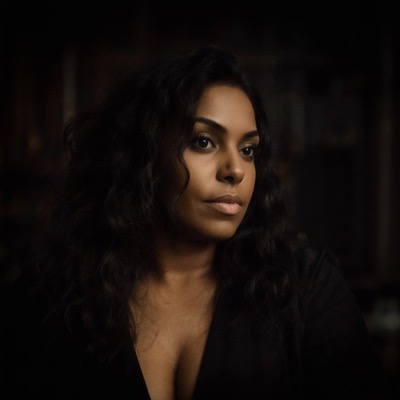
The guest
Who is Afro Futcha?
Afro Futcha is the creative name of Diane Laidlaw, a British AI filmmaker, music video director, music producer and DJ whose work brings Black culture, heritage and technology together. Her music video What Do I Know won first place in the music video category at Project Odyssey, and in 2026 she built 6 Minutes, a 43-minute AI mystery, in public in three weeks. She has taught Midjourney since 2023 and runs AI filmmaking workshops.
- Real name
- Diane Laidlaw
- Known for
- 6 Minutes, Quiet Please, What Do I Know, Give It to Me, Warm Coat
- Awards
- First place, music video category, Project Odyssey, for What Do I Know. Nominated by Escape.AI and the Texas AI Film Festival
- Teaching
- Teaching Midjourney since 2023, and running AI filmmaking workshops
- Speaking
- TED AI Vienna, where in 2026 she hosted its first AI horror competition
- Before AI
- About 15 years in web design, radio DJ, music producer
By the numbers, per Diane
Key takeaways
- 01
6 Minutes started as a 30-second clip Diane posted with no plan. Viewers wanted to know what happened next, so she kept going: a 43-minute 1985 New York mystery, written, generated, edited and posted in three weeks, with an ending nobody has guessed.
- 02
She works best to short deadlines. She is ADHD and autistic, and a long timeline lets her overthink and doubt herself. Four-hour Gen Jams and a deadline every morning cut all of that out.
- 03
In her workshops the rule is to play: get a clip on the timeline and work it out later. That is how a 43-minute film got made in three weeks.
- 04
Quiet Please has no dialogue. It tells the story of her son's sound sensitivity entirely through sound, and it was built from one base image, using Seedance 2.0 as the image generator with cut to prompts, then screenshots and upscales.
- 05
Fight for the runtime your story needs. The studio wanted 90-second clips. Diane argued that people will stay if the story is right, and Quiet Please changed their thinking.
- 06
Catch the feeling while it is fresh. Silly Me was written, made in Suno, filmed with Seedance 2.5 and released on the day it happened, with a video that took about three hours.
- 07
Midjourney got her out of bed while she was grieving her friend Ty. Her music video for a track featuring him, What Do I Know, won Project Odyssey and kickstarted everything.
The session, narrated
No plot. No theme. Just put it out.
Chris and Andrew had wanted Diane on the Creator Sessions for a long time. Her work is, by Chris's count, easily in the top three most featured on the weekly show, and viewers keep sending it in. She brought a mix of client work, passion projects and pieces nobody had seen yet, and we got through five of them. This is the session, narrated in order, with every lesson pinned to the moment she said it.
Start the narrationSkip to the 15 lessons
Run of show
- 0:00Thirty seconds that became 43 minutes.
- 8:43Web design, radio and the beatmaking housewife.
- 12:26Four hours, or one night.
- 18:35A story about her son.
- 24:02Three images, one film.
- 38:00Not a 90-second woman.
- 39:48Hugging one minute, cussing the next.
- 49:02One phone call, one song, one day.
- 1:00:56The film that got her out of bed.
- 1:11:01Why is that man following you?
- 1:18:02Nothing looks plastic any more.
- 1:27:04Back for a second session.
Thirty seconds that became 43 minutes.
On the weekly show we had already seen Diane's work almost every week: The Three Pigs preview in May, Beans on Toast, made in four hours for the Director's Cup Gen Jam, in July, and in August part three of a film she was building one minute at a time, which topped the audience vote with nine straight 1s. That film is where the session started.
The weeks before had been workshops. One, called Day Job, ran from 10am to 8pm, with Diane feeding the room and handing out credits, and ended with 23 or 24 finished films. All that time helping other people build left her itching to make something with Seedance 2.5, which had just come out. So she started 6 Minutes.
“It's a project that started off with like 30 seconds of a clip that ultimately became 43 minutes of a film. It's the longest AI film I've ever done.”
Afro Futcha▶ 4:13
She didn't know the story when she started. She built it as she went, posting every other day, and watched people come back to rewatch the whole thing each time a piece was added. Sound design was part of the challenge, and she is still working on it, but the hardest part was keeping a story tight in the wild.
“I'm still a student myself.”
Afro Futcha▶ 7:17
A lot of her followers are learning too, so she showed the process as she went. And nobody guessed the ending, which she says is her favourite part.
Web design, radio and the beatmaking housewife.
Andrew asked his usual question: where did it all begin? Not in film. Diane's background is web design, which she did for about 15 years. Before that she was a radio DJ on three stations, including New Wave Station, run by Marc Mac of 4hero, and Brixton Radio. On another she got to interview Teena Marie. Before that, a council job.
“AI to me is just another medium for me to be creative.”
Afro Futcha▶ 9:31
Underneath all of it was music production. Her family are heavily into music, and people used to know her as the beatmaking housewife. Give her a sewing machine, a DAW or an AI model, she says, and she will make something with it.
“Getting into this has now made me think, damn, I wish I went to film school.”
Afro Futcha▶ 9:38
She is learning filmmaking backwards: making the films while studying editing, sound design and story at the same time.
Four hours, or one night.
Chris said what a lot of creators think: the speed Diane works at, in competitions and Gen Jams, is intimidating. Is there anything people can learn from it? She was clear it isn't a hack for everyone. It's how her brain works.
“If I'm only given a very short time span to do something, then I automatically cut all of that out. Then it's just about working, working, working.”
Afro Futcha▶ 13:41
She is ADHD and autistic, and the ADHD side wins. On a long project she can't hold on to the excitement, and she starts to overthink and doubt herself. Machine Cinema's Gen Jams, where you get four hours to make a film, showed her the alternative. There is no time to mull over which story to tell.
6 Minutes ran on the same rule, with a deadline every morning. Wake up, think about the story, write it, generate, edit, and post by the next morning, whatever state it was in.
“It was just like, no, put it out and then move on to the next.”
Afro Futcha▶ 15:24
It is also what she teaches. People in her workshops get stuck in their heads and forget they are just playing with a bit of tech. The hosts' phrase for it was bring back silly. When the conversation turned to Parkinson's law, that work expands to fill the time you give it, and the 80/20 rule, Diane said she had been teaching both without knowing what they were called.
“That's how I was able to get a 43 minute film done within 3 weeks, because I was like, forget about all that, just put it down on the timeline. We'll work it out in the mix.”
Afro Futcha▶ 17:50
A story about her son.
Quiet Please was made during Diane's time with Nura Studios, a company she worked with from January to about July. It is about her son. He is autistic and has ADHD, and his autism wins. He is sensitive to sound, as Diane was as a child, when even a flushing toilet was too loud. At school he wouldn't eat in the canteen because he couldn't bear the sound of people eating. Lunchtime was his favourite time anyway, because he could walk round the playground on his own, in the quiet.
“I don't see stories about that. I don't see stories of little brown boys having issues with sound or neurological issues.”
Afro Futcha▶ 20:14
The film has no dialogue at all. You feel his tension in the canteen and his calm on his own through sound alone. People have messaged her to say it made them cry, which she says is exactly what she aims for.
It got made because of a good boss. Isabelle asked Diane to talk through several ideas, saw her face light up at this one, and told her that was the story to work on. Diane thinks that is what is missing from a lot of creative work: finding out what the individual creator is passionate about.
“I am at my best when you just say, Diane, I leave it in your hands.”
Afro Futcha▶ 23:13
Three images, one film.
Chris said that from the very first second he felt what it was like to be in that school canteen, and the piano in the outro got to everyone. His wish afterwards was for more personal, emotional storytelling like this, and less sci-fi and horror. Andrew thought the cartoon style helped: not being photoreal let the story land.
Mary Unfiltered asked in the chat what the film had taught her about AI filmmaking. The answer was technical. Diane had Seedance 2.0 early, before most people, and noticed it could hold a style and a look consistent across a 10 or 15-second generation like nothing else at the time.
“Why don't I use the video as my image generator, and I can just say cut to this scene, cut to this scene, cut to this scene.”
Afro Futcha▶ 35:29
The Quiet Please workflow
One base image, a whole film
- 01Make one base imageRealistically the film came from one image, and only three were made in total.
- 02Let the video model hold the lookSeedance 2.0 kept the style consistent across a 10 or 15-second generation.
- 03Prompt the cutsStart on the boy in the canteen, then cut to these people, cut to those people, cut to him outside.
- 04Screenshot the frames you needGrab stills straight from the generated video.
- 05Upscale themBring the grabs up to a usable quality.
- 06Start the next run from thereEach upscaled frame becomes the starting point for the next set of cuts.
From Diane's answer at 34:24 to 36:23 in the session.
Realistically, the whole film came from one image, and only three were made in total. Chris pointed out that Marco Magario, watching in the chat, had made his film from four images the week before. Multi-shot generation changed everything, the hosts agreed, especially for anyone who didn't want to build a full bank of first and last frames.
Not a 90-second woman.
Diane added one more thing about the storytelling. When she started at the studio, they wanted 90-second clips. She didn't.
“I'm not a 90 second woman. I'm so sorry, but I like to take my time.”
Afro Futcha▶ 38:08
Her boss worried people would stop watching after 30 seconds. Diane's argument was that if the story is right, people stay. After Quiet Please, the studio started working towards longer films.
“If we can watch Game of Thrones in a weekend, you can watch Quiet Please for six minutes.”
Afro Futcha▶ 38:51
Andrew had made the same point earlier about attention spans. Attention isn't shrinking. It is just harder to earn at the start, and once you have it, people binge.
Hugging one minute, cussing the next.
Diane calls this one client work very loosely. She heard the song, couldn't stop playing it for weeks, and messaged the artist, DPROSPER, co-founder of the New York platform Soul In The Horn, offering to make a video. He said yes. She made it in about two days, unpaid. The beat is by Grammy-nominated producer King Michael Coy.
Mary asked why the visuals felt so dreamy against such a painful subject. Contrast, Diane said, is important in any film, and she often pairs something deep with a vibrant look. It isn't a rule she follows. It has to click, and she can't fully explain why it does.
“It's just spiritual almost. It just feels like, yeah, that's the right tone.”
Afro Futcha▶ 47:35
The look itself wasn't new. She had been working on that style in Midjourney for a long time, which answered Danny Ratcliff's question in the chat. Her first idea was a man walking down the street with the story happening around him. Then she thought it would be funnier to show random couples all over each other one minute and cussing each other out the next, because that is what love is: breaking up and making up.
One phone call, one song, one day.
Silly Me is Diane's own song. A new version of Suno had just come out, and she is a soul head, into the music of the 70s and 80s, so a lot of her music leans that way. The video was almost an afterthought.
“It took me about 3 hours to do this video. And the reason why it took me three hours was because I just wanted people to listen to my music.”
Afro Futcha▶ 50:33
Chris saw some Wes Anderson in the pinks and the palette, and Andrew was reminded of Pleasantville. Danny asked why she always casts herself. Diane loves 1940s and 1950s swing dresses, and there was a time she wore one everywhere. She loves the Stepford wife look, she said, just not the lifestyle.
The song came from a real call. A man she had been in love with, who didn't love her back, rang to ask how she was, and all her anger vanished the moment she heard his voice. Oh, silly me, here I go again.
“So he called me, I wrote the song, I did the video, and then I put it out.”
Afro Futcha▶ 57:31
Casting herself isn't always easy. Models often turn her into a Latina woman. But she went to drama school and wanted to be an actress until she was about 17 or 18, so seeing herself on screen means something. The video was made with Seedance 2.5, and that speed is what she loves about AI: capturing a feeling before it fades.
How long each piece took
From three weeks to three hours
Bar lengths on a log scale, so the gap is even bigger than it looks.
Elapsed time, as Diane gave it at 7:21, 14:35, 40:46 and 50:33 in the session. Three weeks is drawn as 504 hours.
The film that got her out of bed.
What Do I Know was Diane's first client music video, made in 2024. She got into AI in 2022 while grieving her close friend Ty, the rapper, who died during Covid.
“One of the things that actually got me out of bed was Midjourney.”
Afro Futcha▶ 1:02:03
By the end of 2024 a friend was telling her to stop hiding and put some work out. Then her ex-partner asked her to make a video for a song he had made with Ty. It meant recreating Ty as a cartoon character and listening to the track on repeat, which was a lot. She put it out with no idea where it would go, and it won first place in the music video category at Project Odyssey. She had made at least two music videos before, and thinks this one won because of the story, told in the lyrics and in the pictures at the same time.
Chris was glad they had watched it after the newer work, because it showed how far the tools have come. As 404 Films pointed out in the chat, this was before Nano Banana and before Seedance. It is also, Chris said, around when Diane first landed on the show's radar. He and Andrew met much of the community in Midjourney audio rooms, so hearing that Midjourney got her out of bed hit home.
Asked whether web design helps her think about visual flow, Diane said she is still working that out. Most of what she does comes from intuition.
“A lot of what I feel like I do is very much based on my intuition. Does this feel right to me? And if I don't get that visceral feeling, then I'm not going to mess with it.”
Afro Futcha▶ 1:10:24
Why is that man following you?
With time running out, Chris offered a choice between Give It to Me, Warm Coat and 6 Minutes. Diane chose 6 Minutes, the newest.
It began as a 30-second clip of her walking into a nightclub, finding her partner dancing with someone else, walking out, and a man following her. She posted it with no plans and went to a talk. When she came home her messages were full of people asking what was going on and why that man was following her. So she asked them one question.
“If I do another 30 seconds, should I move it forward in time or should I go back in time? And they said, go forward in time.”
Afro Futcha▶ 1:13:16
Having him attack her felt too clichéd, so the next part opened with people being interviewed about her going missing. From there the 30-second pieces became two or three-minute pieces, and eventually a 43-minute film. If you like Murder, She Wrote or Columbo, it is in the same vein, and set in 1985, one of her favourite periods.
How 6 Minutes was built
From a 30-second post to a 43-minute film
- 01Post 30 seconds with no planA Seedance 2.5 clip: Diane leaves a nightclub after seeing her partner with someone else, and a man follows her out.
- 02Ask the audience one questionForward in time or back? They said forward.
- 03Skip the clichéNo attack. The next part opens on people being interviewed about her disappearance.
- 04A deadline every morningThink of the story, write it, generate, edit, and post by the next morning, whatever state it is in.
- 05End on a cliffhangerSo people come back the next day.
- 06Let the pieces growFrom 30 seconds to two or three minutes a drop, until the film reached 43 minutes in three weeks.
- 07Then fix itGrade, repair the sound, swap music that doesn't fit and redo faces that drifted.
From 1:12:35 to 1:14:33, and 1:25:15, in the session.
Chris compared it to world models where the audience steers the story. Diane went for Black Mirror's Bandersnatch, with one difference: there, the paths were already made.
“This is taking it to the next level. We don't know what's coming next, and I don't know what's coming next.”
Afro Futcha▶ 1:15:28
The hosts brought up Dubplate Drama, the Channel 4 series where viewers voted on what happened next, and R. Kelly's cliffhanger songs. The hosts thought it was the kind of story the BBC would pick up. Diane laughed off the idea of being called the first to do it, in case someone had done it before.
Nothing looks plastic any more.
We watched the opening: Alexia Smith, a dancer and actress, last seen leaving Sam's bar in upper Manhattan, and Detective Rogers questioning a battered man who says he banged his head on the bathroom cabinet. Chris stopped it there. Straight after the 2024 video, he said, the jump was obvious: the wounds and the faces don't look plastic any more, they look like real people.
The full film is already out on her YouTube channel. Diane was in the final edit, grading and fixing the sound where it dipped in and out, swapping music that didn't fit, and going back over scenes where faces had drifted.
“When you watch it from beginning to end, your idea of who you think done it totally changes, and then your idea of what six minutes means also changes.”
Afro Futcha▶ 1:25:43
She also made a three-minute blooper reel, to humanise characters from such an intense film.
Back for a second session.
Five films in, there was no time for the rest, so Chris invited Diane back for a second session. Give It to Me and Warm Coat are still waiting. His takeaway from the session: if your story needs to be longer than the client wants, push back.
Next for Diane was Shake Film Festival in La Ciotat, France, where Chris was hosting, then TED AI in Vienna in October. Last year the organisers hired a 100-year-old cinema for her to talk about her journey into AI. This year they invited her back to host their first AI horror competition, at an event where Geoffrey Hinton was speaking.
“They invited me back this year to host their first ever AI horror competition.”
Afro Futcha▶ 1:31:35
The lesson ledger
15 lessons from 93 minutes with Diane.
Every lesson is pinned to the moment it was said. Each one ends with something you can do this week.
-
01Business
Leave them on a cliffhanger
“Making sure that I left on a slight cliffhanger so they came back the next day.”Afro Futcha ▶ 6:56
Try thisIf you post a story in parts, end every part on an open question, and post the next one on a schedule your audience can learn.
-
02Mindset
Use short deadlines to kill overthinking
“If I'm only given a very short time span to do something, then I automatically cut all of that out. Then it's just about working, working, working.”Afro Futcha ▶ 13:41
Try thisEnter one four-hour Gen Jam, or give yourself a single afternoon to finish a one-minute film, start to end.
-
03Workflow
Set a deadline every morning
“I would wake up in the morning and I would think about the story. I would write the story out of that day. I would generate my video. I would edit everything out. The next morning was my deadline to put stuff out.”Afro Futcha ▶ 14:53
Try thisFor one week, write, generate, edit and post one short scene a day, with the next morning as a hard deadline.
-
04Mindset
Ship it, flaws and all
“Regardless of the sound wasn't right, or regardless if his face drifted or whatever. It was just like, no, put it out and then move on to the next.”Afro Futcha ▶ 15:16
Try thisPost your next work in progress before it feels finished, and fix it in a later cut.
-
05Workflow
Get a clip on the timeline first
“Let's just do a clip and throw that on a timeline. We'll work it out later on.”Afro Futcha ▶ 16:44
Try thisStart your next project in the edit: drop in your first generation within ten minutes, before you plan anything else.
-
06Story
Tell the story you never see
“I don't see stories about that. I don't see stories of little brown boys having issues with sound or neurological issues.”Afro Futcha ▶ 20:14
Try thisWrite down a story from your own family that you have never seen on screen, and make a one-minute version of it.
-
07Craft
Let sound tell the story
“This one actually has got no dialogue in it. You will experience this film through sound.”Afro Futcha ▶ 20:49
Try thisMake a short with no dialogue at all, where the sound design carries every change in the character's state.
-
08Business
Pitch the idea that lights you up
“We're not tapping into what the individual creator is really passionate about, because that's where you're going to get the best stories.”Afro Futcha ▶ 21:57
Try thisTake three ideas to your next client meeting and lead with the one you would make for free.
-
09Workflow
Use the video model as your image generator
“Why don't I use the video as my image generator, and I can just say cut to this scene, cut to this scene, cut to this scene.”Afro Futcha ▶ 35:29
Try thisGenerate one 15-second multi-shot clip from a single image, screenshot the best frames, upscale them and use them as your next starting images.
-
10Business
Fight for the runtime
“I'm not a 90 second woman. I'm so sorry, but I like to take my time.”Afro Futcha ▶ 38:08
Try thisWhen a brief caps the length, show the client a cut at the length the story needs before you agree to trim it.
-
11Craft
Build your style before you need it
“I had actually been working on that style for a long time in Midjourney.”Afro Futcha ▶ 47:47
Try thisKeep a running Midjourney style you return to every week, so it is ready when the right song or story turns up.
-
12Story
Put yourself in the work
“There's always a part of myself in everything I make.”Afro Futcha ▶ 56:24
Try thisCast yourself, or a version of yourself, in your next short, built on something that really happened to you.
-
13Mindset
Catch the feeling while it's fresh
“So he called me, I wrote the song, I did the video, and then I put it out.”Afro Futcha ▶ 57:31
Try thisNext time something gets to you, make and release a piece about it the same day.
-
14Mindset
Put the work out there
“I put it out there with no idea of where it was going to go. And I ended up winning Project Odyssey.”Afro Futcha ▶ 1:03:06
Try thisEnter one piece you have been sitting on into a competition this month.
-
15Story
Ask the audience, keep the pen
“If I do another 30 seconds, should I move it forward in time or should I go back in time? And they said, go forward in time.”Afro Futcha ▶ 1:13:16
Try thisPost a 30-second opening with no plan, ask viewers one simple question about what comes next, then decide the rest yourself.
The toolkit, in Diane's words
- Seedance 2.5core
6 Minutes began as a Seedance 2.5 clip just after it came out, and Silly Me was made with it.
▶ 1:13:16 - Seedance 2.0then
She had it early, before most people. Its consistency over 10 to 15 seconds let her use video as her image generator on Quiet Please.
▶ 35:09 - Midjourneycore
Where she built the style behind The Truth About Love. In 2022 it was what got her out of bed.
▶ 47:47 - Sunocore
She made Silly Me when a new version of Suno came out. Her own music leans to 70s and 80s soul and jazz.
▶ 49:55 - invideouses
Her Day Job workshop, a 10am to 8pm day that ended with 23 or 24 films, ran within invideo.
▶ 3:01 - Nura Studiosthen
The company and film platform she worked with from January to about July 2026, where she made Quiet Please.
▶ 18:54
On the record
“I'm not a 90 second woman. I'm so sorry, but I like to take my time.”
“If we can watch Game of Thrones in a weekend, you can watch Quiet Please for six minutes.”
“I don't see stories of little brown boys having issues with sound or neurological issues.”
“One of the things that actually got me out of bed was Midjourney.”
“AI to me is just another medium for me to be creative.”
“I am at my best when you just say, Diane, I leave it in your hands.”
“This is taking it to the next level. We don't know what's coming next, and I don't know what's coming next.”
“I'm still a student myself.”
Quotes are trimmed of filler words for reading. Every timestamp opens the session at that moment.
Chapters
- 0:00Diane joins: a top three creator on the weekly show
- 2:43Two workshops and a film-a-day Day Job
- 4:036 Minutes: from 30 seconds to 43 minutes
- 5:59Telling a story in the wild
- 8:43Where did it all begin?
- 9:01Web design, not film school
- 10:07Radio DJ and the beatmaking housewife
- 12:26How does she work so fast to deadlines?
- 13:05ADHD, autism and short time spans
- 14:21Machine Cinema Gen Jams: a film in four hours
- 14:53A deadline every morning
- 15:28We're just playing
- 18:35Setting up Quiet Please
- 19:25A film about her son
- 21:34The boss who saw her face light up
- 24:02QUIET PLEASE
- 31:02Less sci-fi, more personal stories
- 33:42What did Quiet Please teach her?
- 35:09One image, and Seedance as the image generator
- 38:00I'm not a 90-second woman
- 39:48Setting up The Truth About Love
- 42:38THE TRUTH ABOUT LOVE
- 46:27Why dreamy visuals for a painful song?
- 49:02Setting up Silly Me
- 51:45SILLY ME
- 56:19Why does she cast herself?
- 57:01Written, made and released in one day
- 1:00:56Ty, grief and Midjourney
- 1:04:52WHAT DO I KNOW
- 1:07:562024 versus now
- 1:11:01How did 6 Minutes start?
- 1:14:50World models, Bandersnatch and Dubplate Drama
- 1:18:026 MINUTES (OPENING)
- 1:23:58The final edit, and a second session
- 1:31:10What's next: Shake Film Festival and TED AI Vienna
Questions this session answers
Who is Afro Futcha?
Afro Futcha is the creative name of Diane Laidlaw, a British AI filmmaker, music video director, music producer and former radio DJ, and a regular on the London AI scene. Before AI she worked in web design for about 15 years. Her 2024 music video What Do I Know won first place in the music video category at Project Odyssey, and in 2026 she built the 43-minute AI film 6 Minutes in public.
What is 6 Minutes by Afro Futcha?
6 Minutes is a 43-minute AI mystery film by Afro Futcha, set in New York in 1985, in the vein of Murder, She Wrote and Columbo. A dancer, Alexia Smith, goes missing after a night out and a detective starts questioning the people around her. It began as a 30-second clip Diane posted with no plan, and grew piece by piece in public over three weeks.
How did Afro Futcha make a 43-minute AI film in three weeks?
She gave herself a deadline every morning: think of the story, write that day's part, generate it, edit it and post it by the next morning, whatever state it was in. She ended each part on a cliffhanger, asked her audience simple questions such as whether to go forward or back in time, and fixed the sound, grade and drifting faces in a final edit afterwards.
Where can I watch 6 Minutes?
The full film is free on Afro Futcha's YouTube channel, youtube.com/@afrofutcha, along with the individual episodes and a three-minute blooper reel.
How was Quiet Please made from one image?
Diane used Seedance 2.0, which she had early access to, as her image generator. Because it held a consistent style across a 10 to 15-second clip, she started from one base image and prompted cuts to new scenes within the video. She then screenshotted and upscaled frames to start the next run. Only three images were made for the whole film.
What AI tools does Afro Futcha use?
On the session Diane talked about Seedance 2.5 for 6 Minutes and Silly Me, Seedance 2.0 for Quiet Please, Midjourney for her signature visual style, Suno for her own music, and invideo, where she ran her Day Job workshop.
What did Afro Futcha win Project Odyssey for?
Her music video What Do I Know, for a track by Artcha featuring the rapper Ty, won first place in the music video category at Project Odyssey. It was her first client music video, made in 2024, and she says it kickstarted everything for her.
Does Afro Futcha have a film background?
No. Diane's background is in web design, which she did for about 15 years, and before that radio DJing and music production. She went to drama school as a teenager, and says getting into AI film has made her wish she had gone to film school, so she is learning filmmaking as she makes films.
Why does Afro Futcha work to such short deadlines?
Diane is ADHD and autistic, and says a long timeline lets her overthink and doubt herself. Short deadlines, like four-hour Machine Cinema Gen Jams or a daily posting deadline, cut that out so it is just about working. She stresses it suits her brain and won't suit everyone.
New Creator Sessions every Wednesday
Long-form conversations with the best AI creators in the world, screening their work live. Tuesdays we review the week's best AI work and you vote.